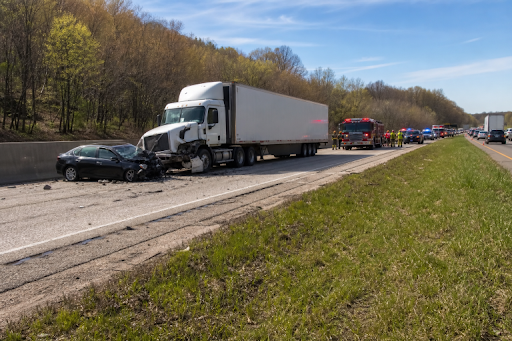
A collision involving a tractor-trailer, delivery truck, bus, or other commercial vehicle can be overwhelming. The size of the vehicles, the force of impact, possible injuries, and presence of a trucking company can make the situation feel more complicated than an ordinary two-car accident. If you need guidance on the issues that may arise after such a collision, you can learn more about trucking accidents and the steps that may follow. The minutes after a crash matter, but they are not the time to decide who was at fault. Focus first on safety, emergency care, and the preservation of accurate details. A calm, organized response can help protect your health and make it easier to manage insurance, repairs, and any questions that develop later.
Stay Safe at the Crash Scene
Start by checking yourself and your passengers for immediate danger. Turn on hazard lights if possible. If your vehicle can be moved safely and local conditions allow it, pull out of active traffic and into a shoulder, parking area, or another protected location. If moving the vehicle would create more danger, leave it where it is and wait for first responders. Do not walk through traffic to inspect damage or confront another driver. Stay clear of leaking fuel, smoke, fire, broken glass, downed power lines, or spilled cargo. Commercial vehicles may carry heavy loads or hazardous materials, so giving emergency crews room to assess the area is especially important.
Call 911 and Request Medical Care
Call 911 promptly and provide the crash location, the number of vehicles involved, visible injuries, blocked lanes, and any hazards. Even when everyone initially feels able to stand or walk, shock and adrenaline can hide pain. Let emergency personnel know about headaches, dizziness, neck pain, numbness, chest pain, or trouble breathing. A police report can provide an early record of the collision, while paramedics can identify urgent concerns. Ask the responding officer how to obtain the report number before leaving the scene, if your condition permits.
Document the Scene Carefully
When it is safe, use your phone to take photos and short videos before vehicles are moved. Capture broad views of the roadway and close-ups of damage. Include lane markings, traffic signals, signs, debris, skid marks, weather conditions, lighting, and construction zones. Photograph the commercial vehicle’s license plate, company name, U.S. DOT number if visible, truck unit number, trailer number, and any visible tire or mechanical issues. Keep original, unedited image and video files. They may preserve helpful data, time, and location details.
Collect Important Information
Exchange basic information politely and avoid debating the crash. Obtain the truck driver’s name, contact details, commercial license information, insurance details, employer name, and vehicle identifiers. If witnesses stopped, ask for their names and phone numbers. Their independent observations may be valuable if accounts later differ. Write down your own recollection as soon as you can. Note where you were traveling, the direction of each vehicle, traffic conditions, what you saw immediately before impact, and what was said afterward. Small details can fade quickly.
Seek Prompt Medical Attention
Get evaluated by a medical professional after a serious crash, even if symptoms seem minor at first. Follow all treatment recommendations and return for follow-up care if pain, stiffness, headaches, sleep problems, or other symptoms emerge. Delaying care can make recovery more difficult and leave gaps in your medical history. Keep a simple recovery journal that records symptoms, appointments, medications, limitations on daily activities, transportation costs, and missed work. This information can help you communicate clearly with healthcare providers and insurers.
Avoid Common Post-Crash Mistakes
Try not to make rushed decisions while you are shaken up. Do not guess about speed, distance, fault, or whether you are injured. Avoid posting photos, opinions, or updates about the crash on social media. Also, do not discard damaged property or authorize major repairs until you have thoroughly photographed the damage and confirmed what your insurer needs. Be cautious with recorded statements and documents. You can be cooperative without agreeing to a settlement, signing a release, or offering conclusions before you understand the request.
Understand What Evidence May Matter
Commercial truck collisions can involve evidence beyond photographs and a police report. Depending on the circumstances, relevant records may include electronic logging data, GPS information, dispatch messages, dashcam footage, inspection reports, maintenance records, cargo documents, driver training files, and roadside inspection results. Large trucks have substantial blind spots, long stopping distances, and limited maneuverability. The Federal Motor Carrier Safety Administration explains how these factors affect nearby drivers, which may help explain why commercial vehicle crashes require a close review of the specific facts.
Recognize Why Responsibility Can Be Complex
The truck driver may not be the only person or business connected to a crash. Depending on the evidence, questions may involve a motor carrier, vehicle owner, maintenance provider, cargo loader, broker, manufacturer, or another motorist. A fatigued driver, a defective part, poorly maintained brakes, an overloaded trailer, or unsecured cargo can pose different issues. No single factor proves responsibility by itself. The details of the crash, the available records, and applicable laws determine which parties may be relevant.
Handle Insurance Contact Thoughtfully
Notify your own insurer within the timeframe required by your policy, provide accurate facts, and keep copies of every message, claim number, estimate, and letter. The trucking company’s insurer or claims representative may contact you quickly. You can listen and provide basic information without accepting blame or agreeing to an immediate payment.
Build a Follow-Up Plan
After the first day, place all crash-related materials in one digital or physical folder. Include photos, the police report number, medical records, repair estimates, receipts, witness contacts, insurance communications, and notes about missed work. Review local filing deadlines before they become urgent, since deadlines can vary by state and by the type of claim involved.
Conclusion
A commercial truck crash can create physical, financial, and practical challenges all at once. Prioritize safety, call for help, obtain medical care, preserve what you can, and keep clear records. Taking these steps will not undo the collision, but it can give you a stronger foundation for managing what comes next. Photograph the vehicles, roadway, truck markings, and visible hazards when it is safe to do so. Keep medical records, police reports, insurance correspondence, repair estimates, receipts, and witness information organized in one place. Avoid guessing about the cause of the fault, making rushed statements, or posting detailed information about the crash online. Commercial truck collisions may involve drivers, trucking companies, insurers, maintenance providers, cargo handlers, and other parties, making careful documentation especially useful. If injuries are serious or responsibility is disputed, timely professional guidance may help you understand your options and important deadlines.